ADA - APY ROS Calculations

Updated: Apr 6

Understanding the Three Metrics
Pool Details now shows three different performance metrics, each answering a different question. They are not supposed to match, and the differences are meaningful.
1️⃣ Delegator Yield (APY)
What it answers
“If I delegate ADA to this pool, what annual return do I earn after costs?”
This is the delegator’s real yield.
What it includes
✔️ Fixed pool cost
✔️ Pool margin
✔️ Zero-block epochs (penalty)
✔️ Stake size effect
✔️ Annualized
What it excludes
❌ Pool pledge advantage
❌ Block luck normalization
Formula (conceptual)
For each epoch:

Then over N epochs:

73 epochs ≈ 1 year, so this is annualized
📌 Why lower than pool performance?
Because delegators pay costs and margin, and zero-block epochs hurt small pools the most.
2️⃣ Pool Performance (ROS / ROA)
What it answers
“How efficiently does this pool convert stake into rewards?”
This is a raw performance metric — before delegator costs.
What it includes
✔️ Total pool rewards
✔️ Zero-block epochs
✔️ Annualized
What it excludes
❌ Fixed cost
❌ Margin
❌ Luck normalization
Formula

📌 Why higher than delegator yield?
Because this ignores fixed cost + margin — it’s the pool’s gross output.
3️⃣ Luck-Adjusted Pool ROS (AdaStat)
What it answers
“How did the pool perform compared to what it should have earned?”
This is a fairness-normalized metric.
What it includes
✔️ Expected blocks (σ / sigma)
✔️ Network parameters (k, a₀, rewards)
✔️ Zero-block epochs
✔️ No operator cost effects
What it excludes
❌ Fixed cost
❌ Margin
❌ Delegator perspective
AdaStat logic
For each epoch:
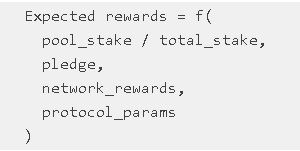
Then:

Reported over fixed windows:
12 epochs
73 epochs (1 year)
Lifetime (all epochs)
📌 This now matches your delegator APY closely — as it should.
🔍 Why These Numbers Are Different (and correct)
Metric | Perspective | Costs | Luck-adjusted | Annualized |
Delegator Yield | Delegator | ✅ Yes | ❌ No | ✅ Yes |
Pool Performance | Pool | ❌ No | ❌ No | ✅ Yes |
AdaStat ROS | Network-fair | ❌ No | ✅ Yes | ❌* |
* AdaStat is implicitly annualized via its own epoch windows.
🧠 Key Insight (most important)
❗ Why your results “click”
Delegator Yield ≈ AdaStat ROS
→ Both penalize unlucky epochs and small pool effects
Pool Performance is higher
→ Ignores costs and fairness normalization
Lifetime > ROS73
→ Early epochs were luckier than recent ones
This is exactly what AdaStat, PoolTool, and CExplorer show when interpreted correctly.
✅ Final takeaway (TL;DR)
Delegator Yield = What stakers actually earn
Pool Performance = Raw reward efficiency
AdaStat ROS = Luck-corrected fairness score


This was an interesting article and I enjoyed reading it. I often browse different topics online, from educational content to practical resources like instagram reels download guides. What I appreciate most is content that is clear, informative, and written in a way that keeps readers engaged.
The article explains ADA and APY calculations in a way that makes complex numbers feel more understandable, which helped me see how important clear explanations are. It reminded me of a time when I worked on a math assignment and had to slowly break down steps to make sense of them. For another creative task, I looked into custom book cover designer near me to learn how visual elements can match content. It showed me that clarity and detail make learning easier.